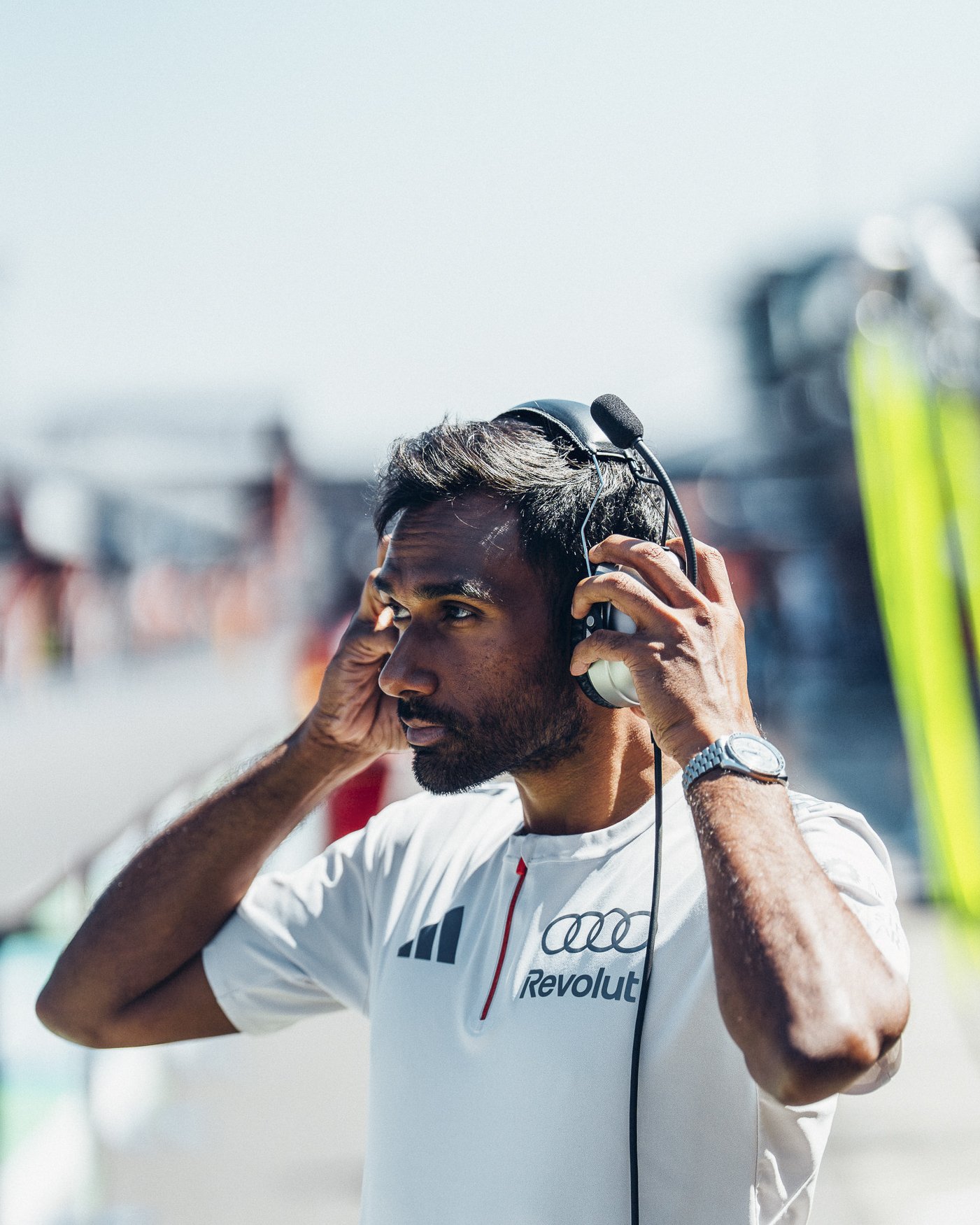
A PIT WALL SYMPHONY
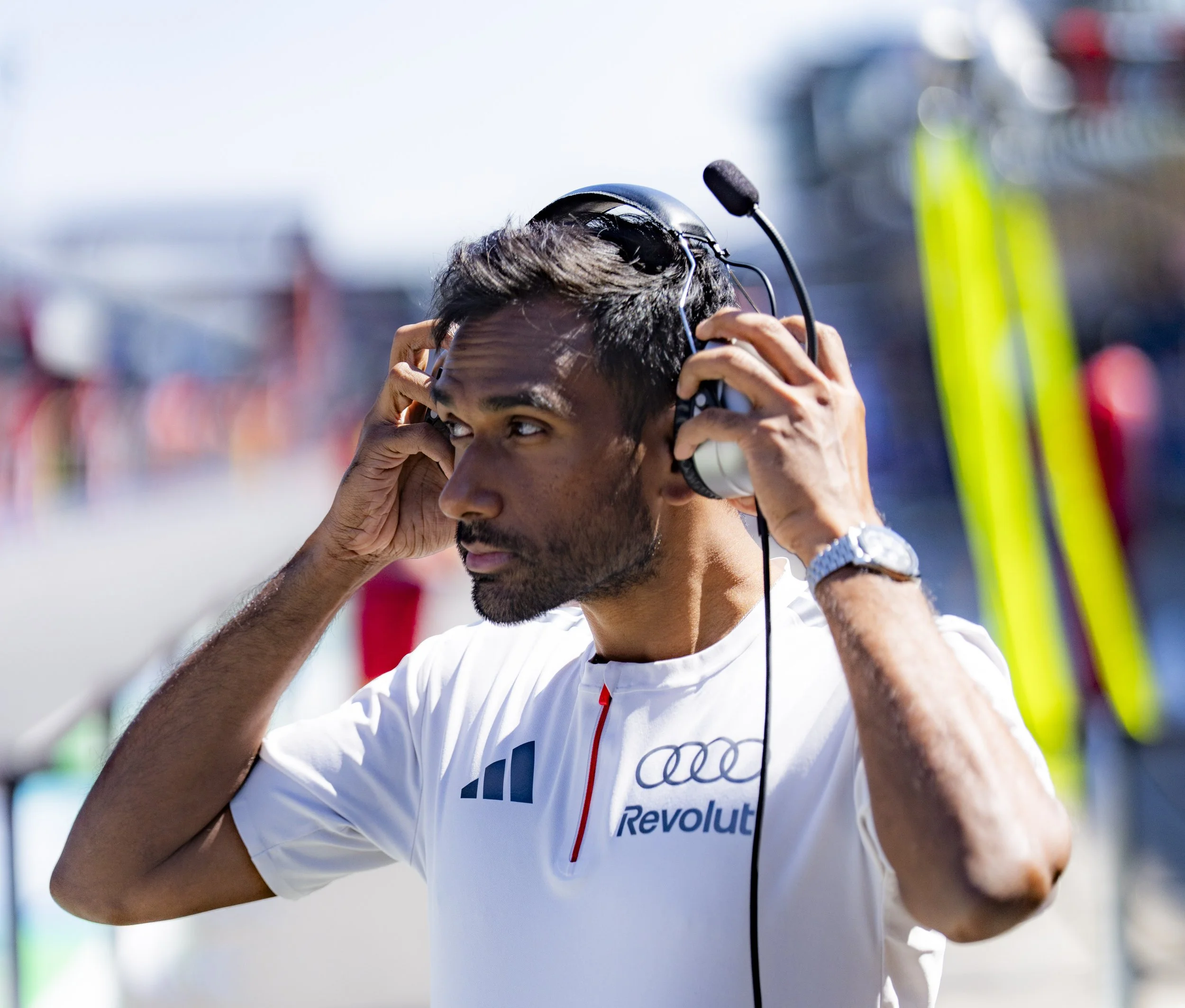
RITHVIK DHANANJAY REDDY - HEAD OF RACE STRATEGY - AUDI REVOLUT F1 TEAM
In his university dorm room near Oxford, Rithvik opened his laptop and pulled out sheets of paper. He was carefully preparing messages addressed directly to Formula 1 aerodynamics managers. In an industry where automated HR portals are flooded with digital applications, he was making a calculated gamble to bypass the initial corporate filters. He utilized every channel available to him, sending emails, connecting on professional networks, and occasionally composing handwritten letters. It was a persistent, multi-pronged campaign designed to land his CV directly onto the desks of the sport’s gatekeepers.
For most young people trying to enter the paddock, the barrier to entry is high. For Rithvik, who was born and raised in India, the world of European motorsport felt distant, but it was not entirely disconnected from his reality. While the sport has a distinct global presence, even hosting a Grand Prix in India from 2011 to 2013, pursuing a career on an F1 pit wall from his childhood bedroom still required a long-term approach. It was a significant distance to cover, but one he believed could be managed with a clear, methodical plan.
The Remote Beginning
Rithvik’s relationship with motorsport began via a television screen. His family followed the sport strictly as spectators, absorbing the distinct engine notes and global spectacles from afar. The earliest memory he recalls was during the 1997 European Grand Prix at Jerez. Though he was too young to fully synthesize the political and emotional weight of the afternoon, the widespread commotion surrounding the intense title collision between Michael Schumacher and Jacques Villeneuve left a permanent impression.
As he matured, his focus shifted naturally away from the cockpit. By the age of 13 or 14, he found himself looking past the drivers and studying the operational architecture of the teams. He observed how an F1 paddock operates as a highly optimized organization, driven by rapid communication, precise execution, and systemic adaptability under pressure. His attention was anchored on the figures orchestrating live decisions from the pit wall, most notably Ross Brawn during Ferrari's successful eras.
Mapping the Path
Operating without industry connections, Rithvik utilized a dial-up modem to audit the sport's baseline entry requirements through rudimentary websites. The data yielded a clear prerequisite: an academic foundation in engineering, mathematics, physics, or computer science.
What followed was a deliberate calculation of geography. He moved to the United Kingdom at age 17 to study engineering at Oxford Brookes University, intentionally positioning himself within England's "Motorsport Valley". The rationale was practical: living within the physical radius of the teams transformed an abstract ambition into a matter of probability. In Oxford, the likelihood of encountering an industry professional, even casually at a local pub or cafe, was statistically viable. Six months into his university enrollment, he initiated his relentless outreach campaign, tracking down specific managers and reaching out to their departments across every platform he could find.
Gaining Hands-on Experience
The foundational motorsport experience was forged in a less formally structured and sanitized environment. While still completing his schooling, Rithvik took a position with a local rally team as a gearbox mechanic. His afternoons were defined by constructing, maintaining, and occasionally fracturing [laughs] mechanical hardware, or scrubbing grease from the garage floor after the cars had departed. It was a period that yielded an essential understanding of mechanical details and established a reputation for collaborative grit; traits that F1 recruiters prioritize heavily alongside academic metrics.
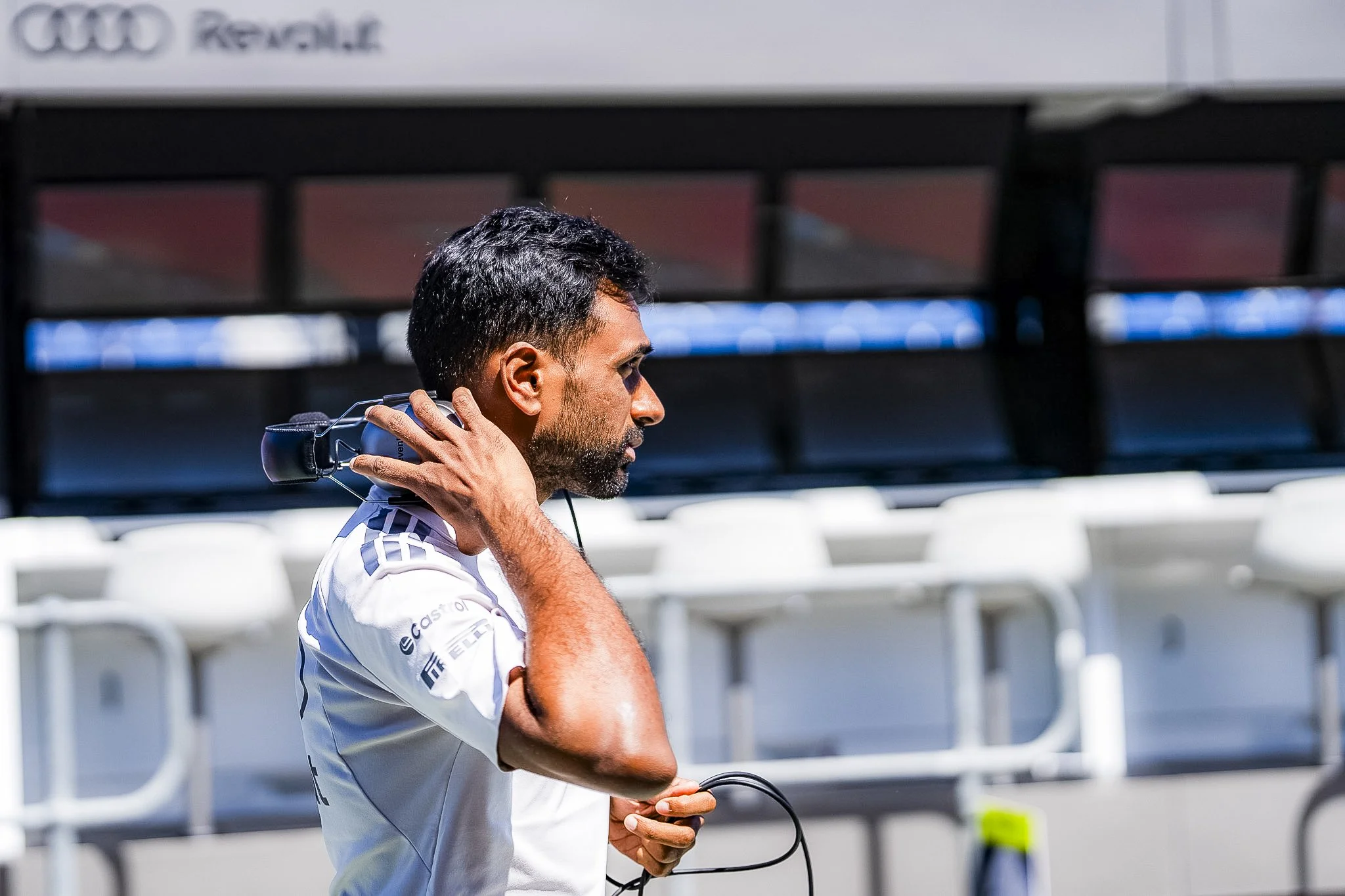
In 2015, the persistent outreach materialized into a year-long internship within the aerodynamics department at the Toro Rosso Formula 1 Team, commencing on the exact same weekend that Max Verstappen and Carlos Sainz made their debuts for the team. Rather than seeking narrow specialization, Rithvik intentionally pursued an expansive, versatile scope of work. His day-to-day responsibilities fluctuated from moving computers to generating simulator maps and running physical test cycles inside the wind tunnel. This systemic overview provided a comprehensive understanding of how the various moving pieces of an F1 operation communicate with one another.
Life on the Pit Wall and the Team's Journey
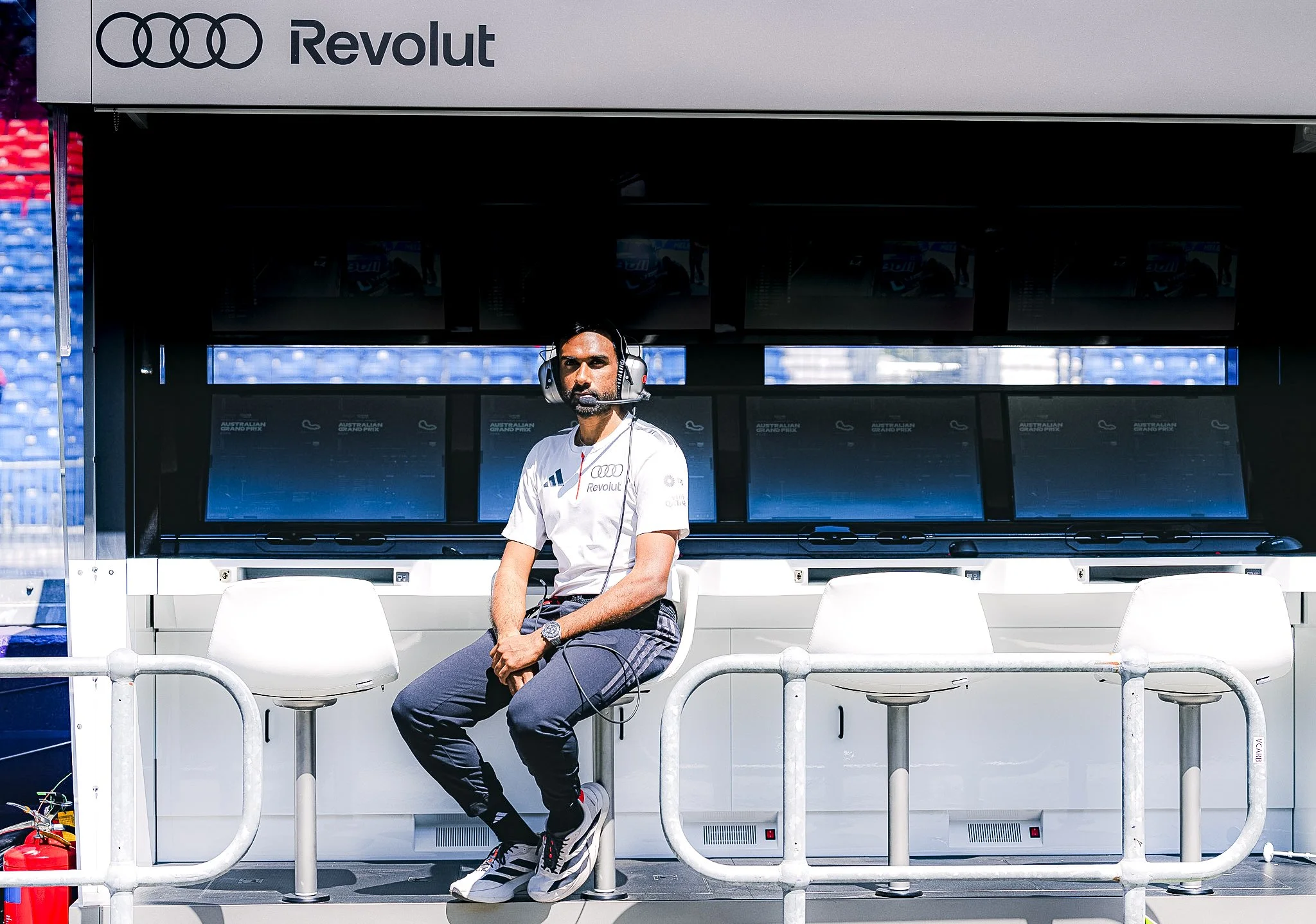
Today, at 31, Rithvik operates as the Head of Race Strategy for the Audi Revolut F1 Team. He has been with the team for four years now, navigating its evolution from Alfa Romeo to Kick Sauber, and now into its historic transition under the Audi banner. He views the team’s historic transition under the Audi banner as a landmark occasion for everyone involved.
His position requires navigating a demanding 24-race global calendar and collaborating heavily with engineering groups across disparate time zones, including managing a strategic unit based ten hours behind sometimes.
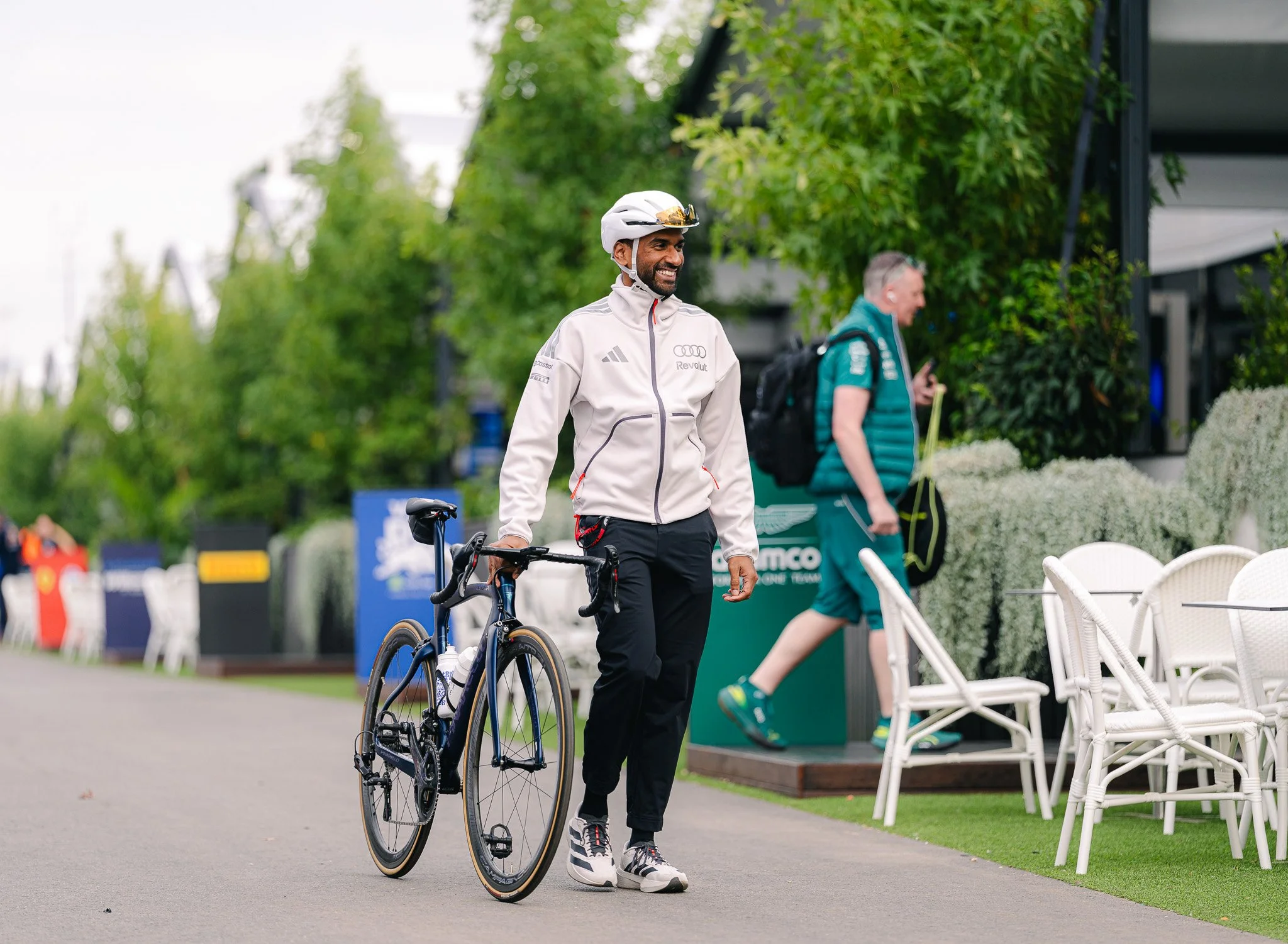
To maintain personal equilibrium against the continuous strain of the paddock, he relocates his base of operations to suit his affinity for the outdoors; having moved from England to Italy, he now resides in Switzerland, where his morning routine routinely involves a bike commute or a swim before entering the factory. He maintains this routine even while away from home; when local track logistics allow, he can frequently be spotted with his bike in the paddock on his way to and from the hotel…and we often cross paths on the circuit during my Thursday track walks.
On a race weekend, his methodology is entirely preventative. Under an operational framework championed by his team, Sunday afternoon is strictly preserved for execution rather than active processing. The cognitive heavy lifting is completed well in advance. Every strategic permutation, from localized weather shifts to a safety car intervention on a specific lap, is simulated, debated, and finalized by the strategy group before the lights even go out.
When variable environments disrupt the initial calculus, the team's preparation pays dividends. During a chaotic, rain-affected race at Silverstone in 2025, the team's initial plans quickly had to be adapted. Forced to recalibrate entirely on the fly while monitoring the live telemetry of rivals like Fernando Alonso and Lewis Hamilton, the pit wall entered a collective "flow state". By closely studying their competitors, the team timed a well-calculated and precisely executed stop to switch Nico Hülkenberg onto slick tyres. This seamless coordination allowed Nico and the team to climb from P19 on the grid to a historic P3 podium finish. Rithvik notes that anything can happen until you cross that finish line, and nothing is ever truly done until you see that final position marked on the classification board under a checkered flag.
Advice for Following your Passion
While Formula 1 strategy relies explicitly on advanced logic and mathematical modeling, Rithvik maintains that human connection within the team and the capacity to project clarity remain the defining variables of a successful career. For those looking to enter the industry from non-traditional backgrounds, his guidance focuses strictly on isolating and optimizing what is within your immediate control.
Emerging technical talent may actively seek roles in lower formulas, GT categories, or domestic rallying, as these operations consistently require labor, and the lack of complex corporate layers offers an unmatched, accelerated learning curve. Furthermore, aspiring professionals should learn to present their capabilities clearly and approach senior figures without hesitation, keeping in mind that every established engineer in the pit lane once managed identical periods of professional self-doubt.
Finally, he encourages aspiring talent to treat the early stages of their careers as an exploratory data and experience-gathering mission to accurately define personal interests, strengths, and professional boundaries. He counsels that the two most vital steps are to never stop learning and to simply trust yourself. By believing in your own capacity and staying committed to the path you have planned, you can succeed if you trust the process.
Thank you, Rithvik, for sharing your story and showing that anything is possible for someone who builds a clear plan and commits to the discipline of executing it.