DESIGN YOUR PATH
PATRICE MINOL - AUTOMOTIVE DESIGNER
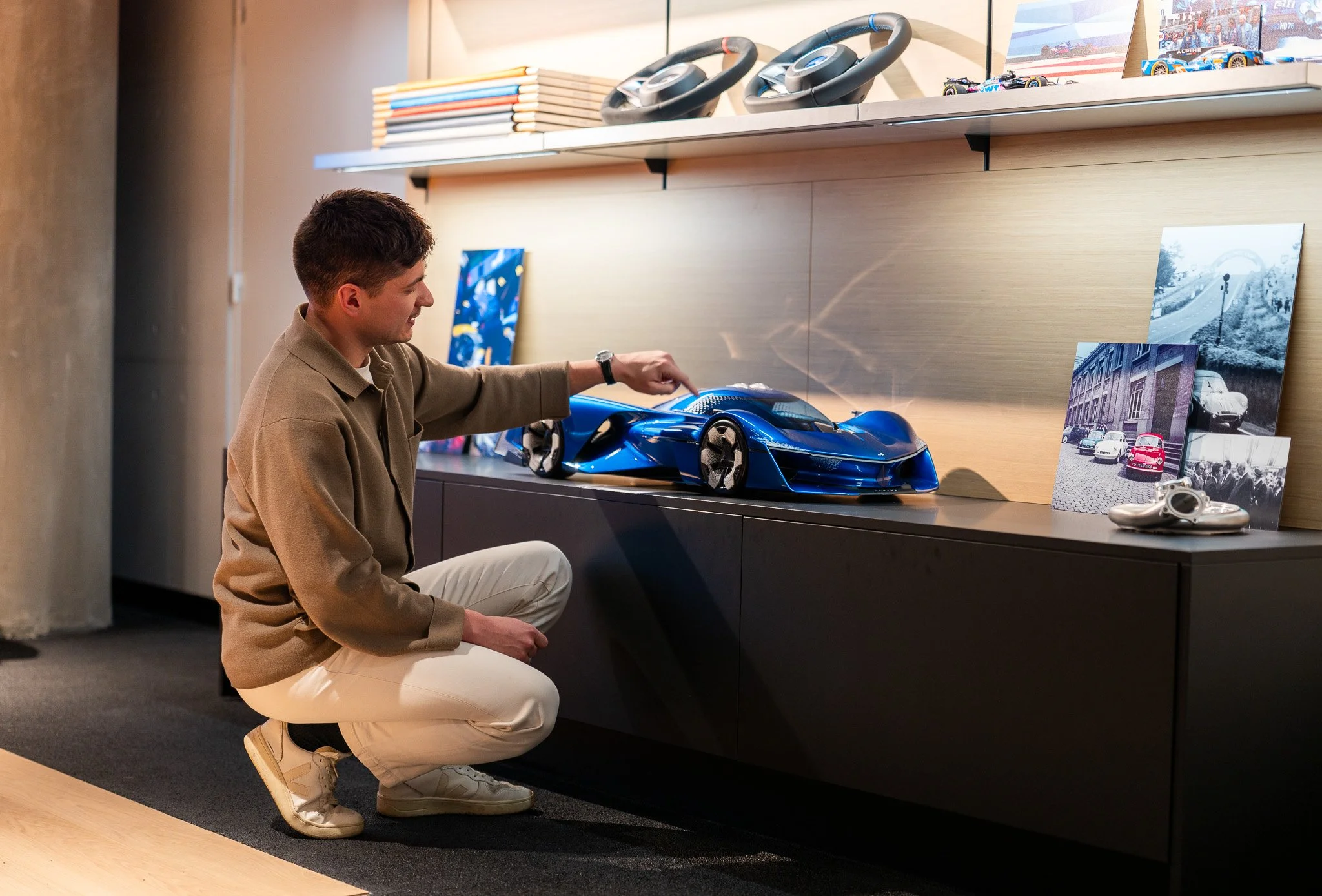
Growing Passions
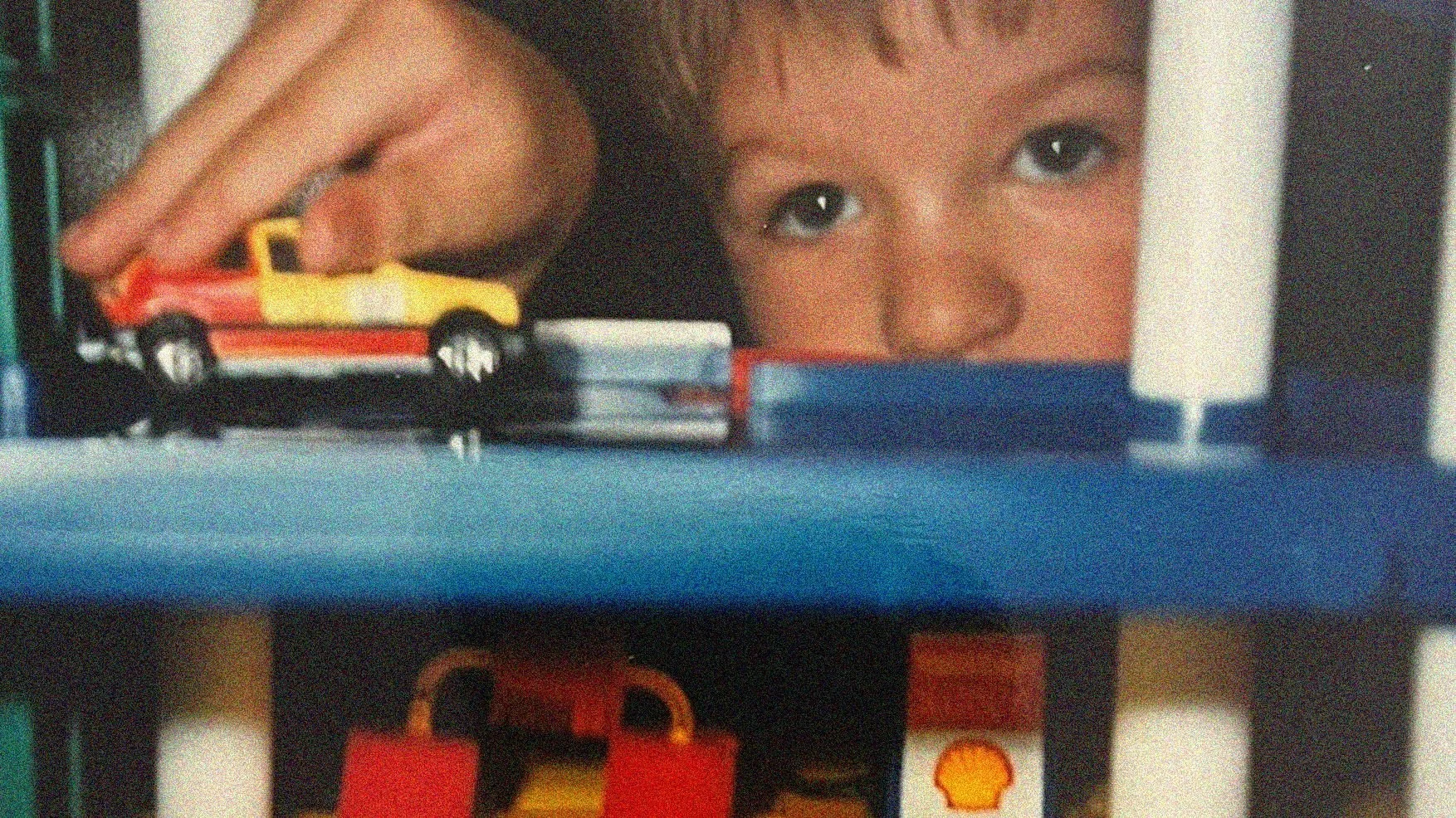
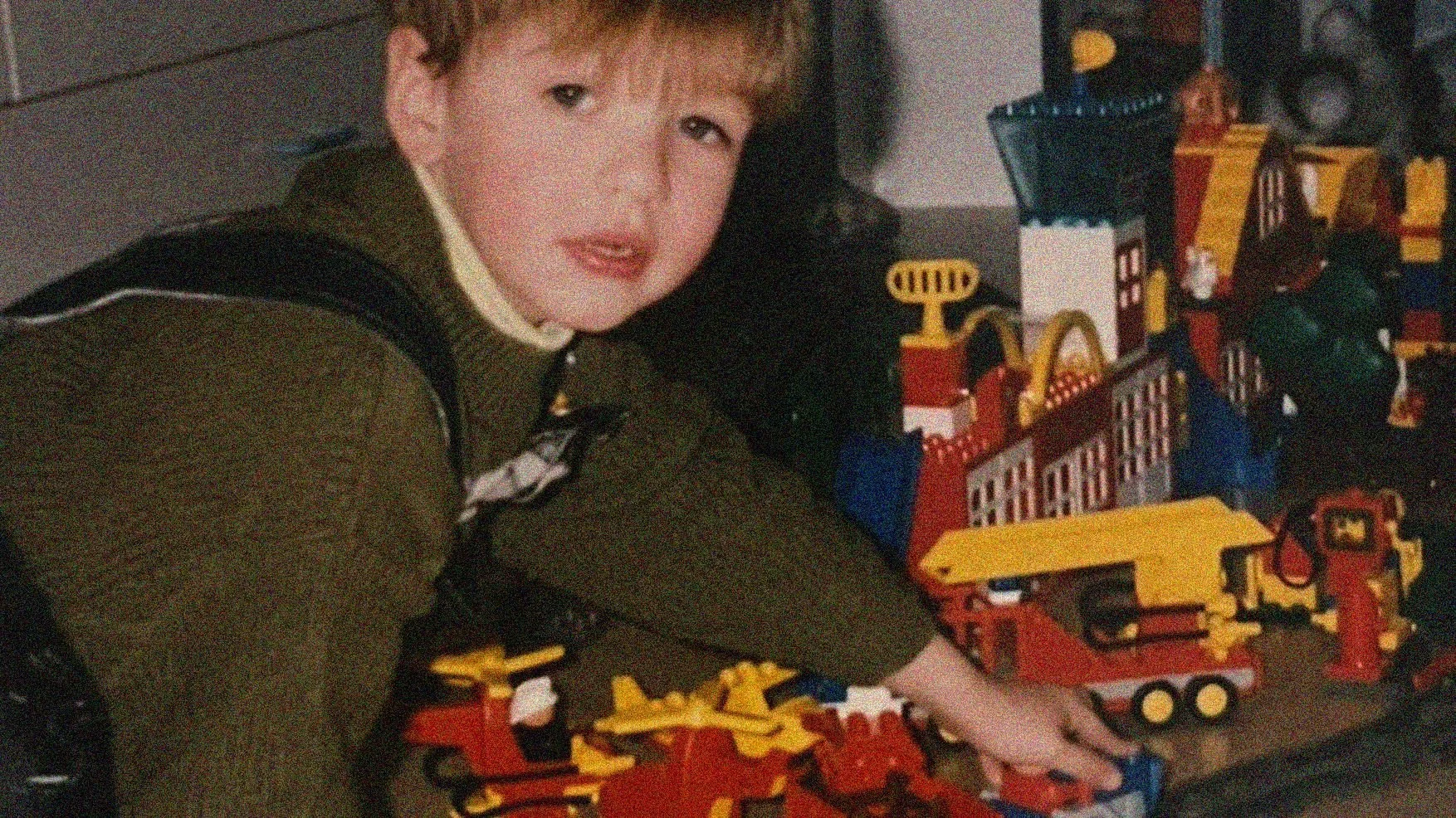
Long before that email, before Paris or Jaguar, Patrice’s relationship with cars had already taken shape.
As a child, he would stumble onto car gatherings by chance. He stopped every time. Watched closely. Asked questions. Talked to people he didn’t know yet. Sometimes he made the kind of deals only a true enthusiast would think of: a few photos in exchange for a ride in their car.
There are pictures of him in Monaco, still a kid, standing next to cars far larger than himself. Not posing. Observing. Already trying to understand something he couldn’t yet put into words.
A few years later, that curiosity found a routine. The iconic Spa-Francorchamps Circuit wasn’t far from his home near Lille. Patrice began going regularly, camera in hand. At first, without ambition. He watched the cars. Took photos in exchange for a ride in the owner’s car. Pure passion.
Over time, those images became more than souvenirs. The conversations deepened. The access widened. What started as curiosity slowly turned into something more serious, without him fully realizing it.
At the same time, creation was already part of his life.
For as long as he can remember, he loved drawing, but never copying. Reproducing existing designs never interested him. He wanted to invent his own forms, his own lines.
By the time he was twelve or thirteen, that instinct had crystallized. He didn’t know how he would get there, or what the path looked like. But he knew what he wanted to create.
He wanted to design cars.
The encounters that made it real
Choosing to pursue design meant committing to an expensive school and stepping onto a risky path. One that wasn’t easy to justify to his family. This wasn’t a harmless interest anymore. It was a real decision, with financial consequences and no guaranteed outcome.
Around that time, Patrice had two encounters that quietly shifted everything.
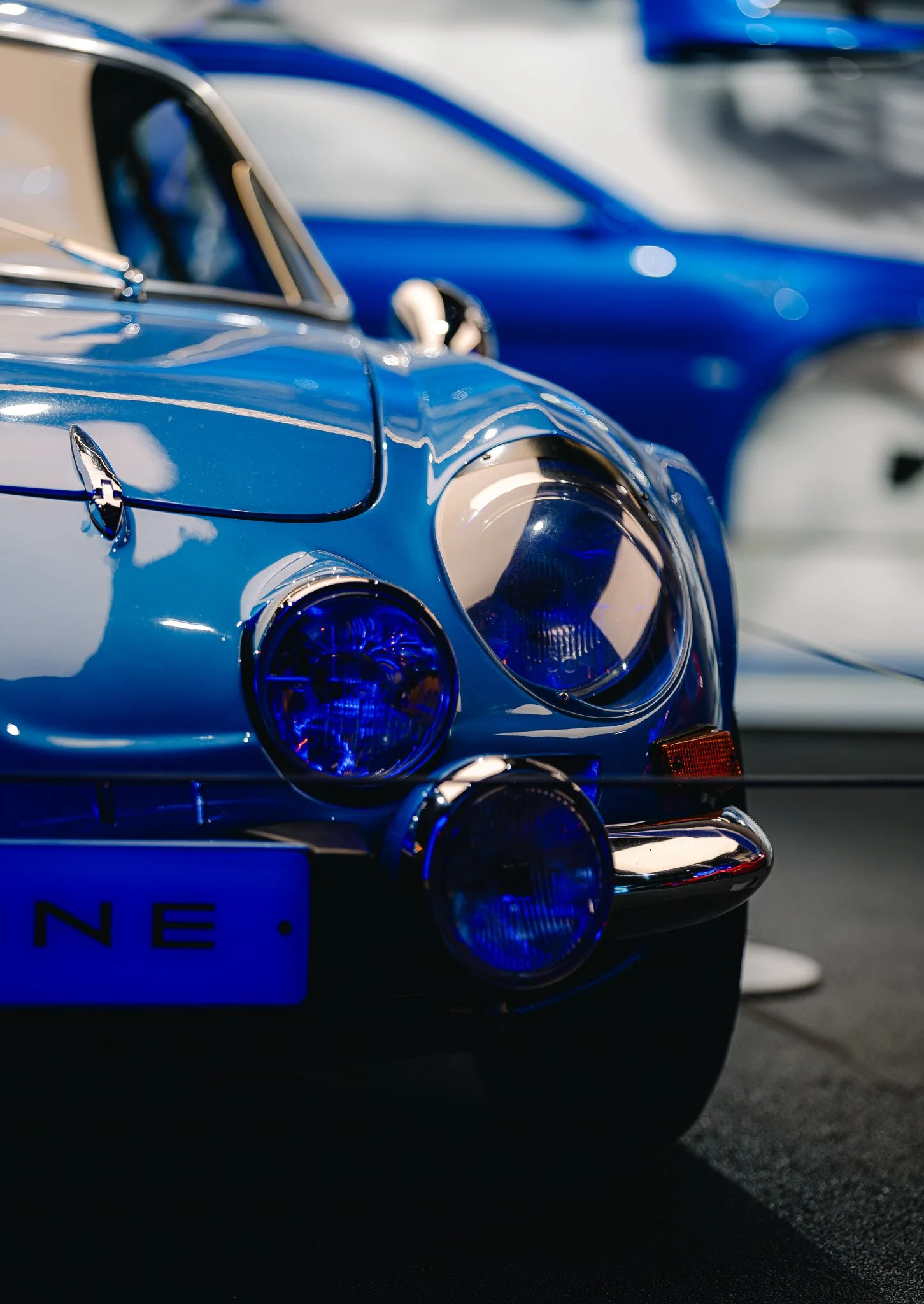
He met a friend while practicing mountain biking who was going to the Design School he would later attend, and he then met François Dequidt, aka POG, a Belgian car enthusiast and popular YouTuber.
Not as an almost unreachable figure behind a screen, but as a real person. Someone who had managed to turn his passion into something concrete.
“These encounters mattered, it made things tangible.”
Seeing people who had taken a similar sensibility seriously helped him put words on what he wanted. It gave him confidence, not just for himself, but to explain his choice to others, to his family.
François and Simon were the push that changed everything.
When commitment stopped being optional
Design school was never a playground for Patrice.
Coming from a down to earth family, he knew exactly what it cost. He and his parents were working hard to finance it, and that responsibility shaped everything. There was no room to drift, no excuse to treat projects lightly.
He worked with focus and discipline. Not to stand out, but to be serious. What mattered just as much was the group. Competition existed, but it was healthy. Students supported each other, pushed together, and believed they would succeed better as a team.
After a while, Patrice went to Paris for an internship and started to settle down, enjoying the city lifestyle and meeting people.
Then came the call from Jaguar Land Rover.
It was unexpected. Accepting their internship offer meant leaving Paris, leaving comfort, and going alone to the UK in 2015 for a six-month internship. A risk with no guarantees.
That’s when POG pushed him to go.
Those six months in England were intense. He worked relentlessly, learned fast, and was trained not just technically, but humanly. At the end of the internship, he was offered his first full-time position.
He credits that turning point to two people: POG, for pushing him to take the leap, and his manager at Jaguar, for believing in him and giving him that chance.
England also shifted his perspective. His passion moved from supercars to classic cars. Surrounded by people who believed in him, Patrice learned to question himself constantly, to ask, to be proactive.
He is not an instinctive artist. He improved through work, focus, and understanding the codes of design.
“We’re not looking for drawings, we’re looking for stories.”
At Jaguar Land Rover, Patrice enjoyed his work. His life outside of work was good. But internally, something was shifting. Management changed. Key people left. The environment became more political, and progress slowed to a halt.
Thrown into the deep end
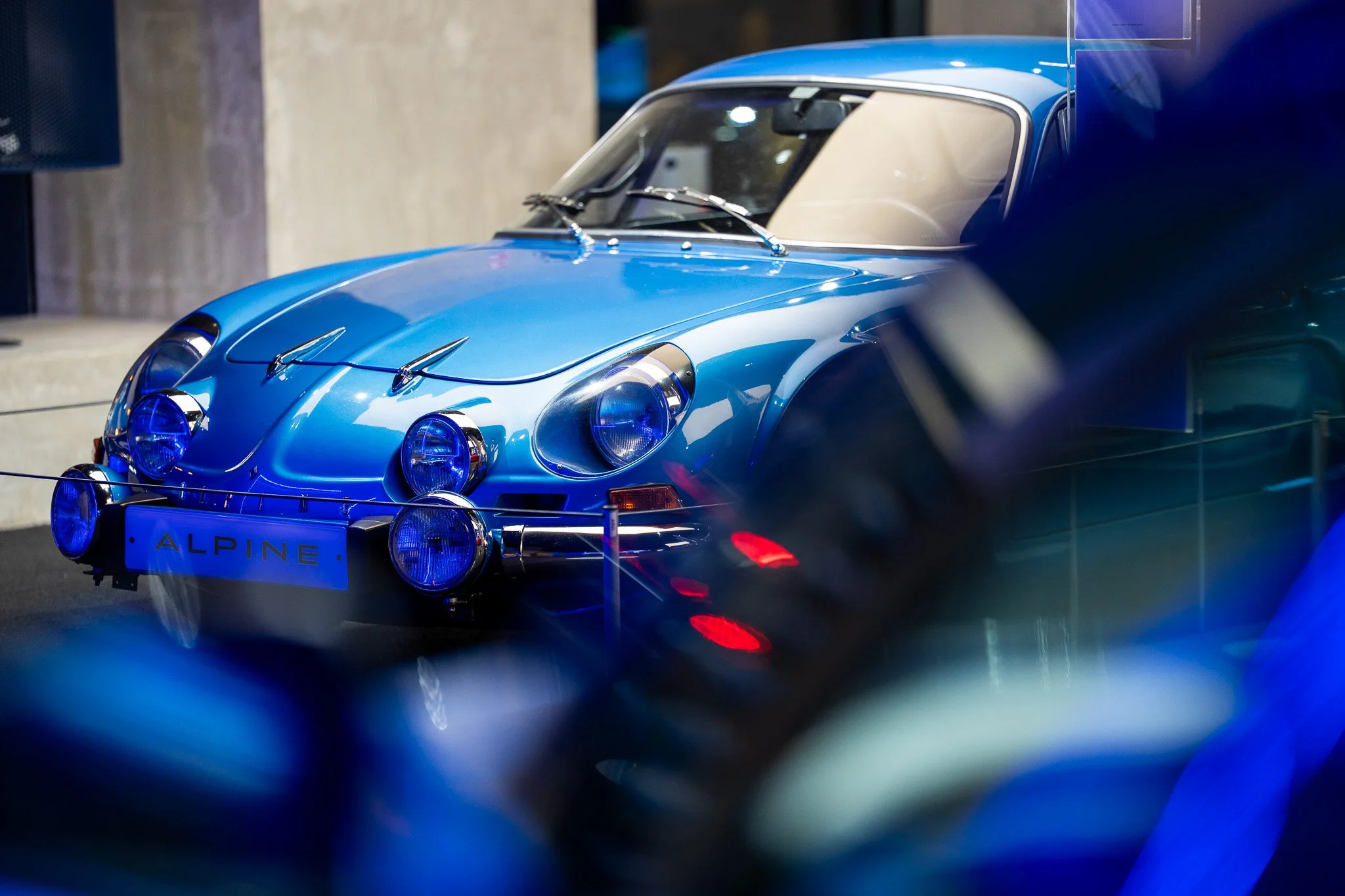
After Jaguar came Alpine.
Alex, his former colleague and 3D modeling partner at Jaguar, recommended him to Alpine.
Patrice didn’t plan to leave Jaguar so early. But he was convinced to join a “special project” without knowing what it was.
As part of the hiring process, Alpine asked him to work on a little project before the interview. A single exercise. One day to show how he thought, how he worked, how he told a story. Everything he had done at Jaguar was under strict confidentiality. This was the only thing he could put on the table.
The project he presented did its job; it convinced Alpine. And just like that, Patrice was on his way back to his home country with Alpine.
His first dream had always been to design a sports car. The second was to work on a concept car. Because with a concept car, there are no limits, you get complete creative freedom.
When the future Alpenglow hydrogen car project arrived, competition began internally. Multiple visions. Selection rounds. From ten ideas (though everybody in the team will continue to collaborate on the project until the end), only two survived.
His vision was chosen. He would get to design his first concept car.
“Jaguar gave me my first opportunity and trained me. Alpine gave me my dream.”
Then came the part nobody sees in the glossy reveal videos: the race against time. The Paris Motor Show wasn’t a date on a calendar, it was a wall moving toward their whole team.
In the final stretch, the car was still drying from the paint process the night before the presentation. Patrice didn’t go home. He stayed up with the team in charge of the concept car realisation for two nights, staying close the way you would before something important is about to happen. Not because anyone asked him to, but because he couldn’t leave. The concept car felt alive now, fragile, almost there. It was a moment comparable to a little kid sitting next to the Christmas tree waiting for his present.
When it finally stood under the lights in Paris, the reaction was immediate: a big hit. The kind of response that changes what happens next.
Because a successful concept is still just a promise. Building a rolling prototype costs millions. Alpine decided to invest to make it real, to make it move.
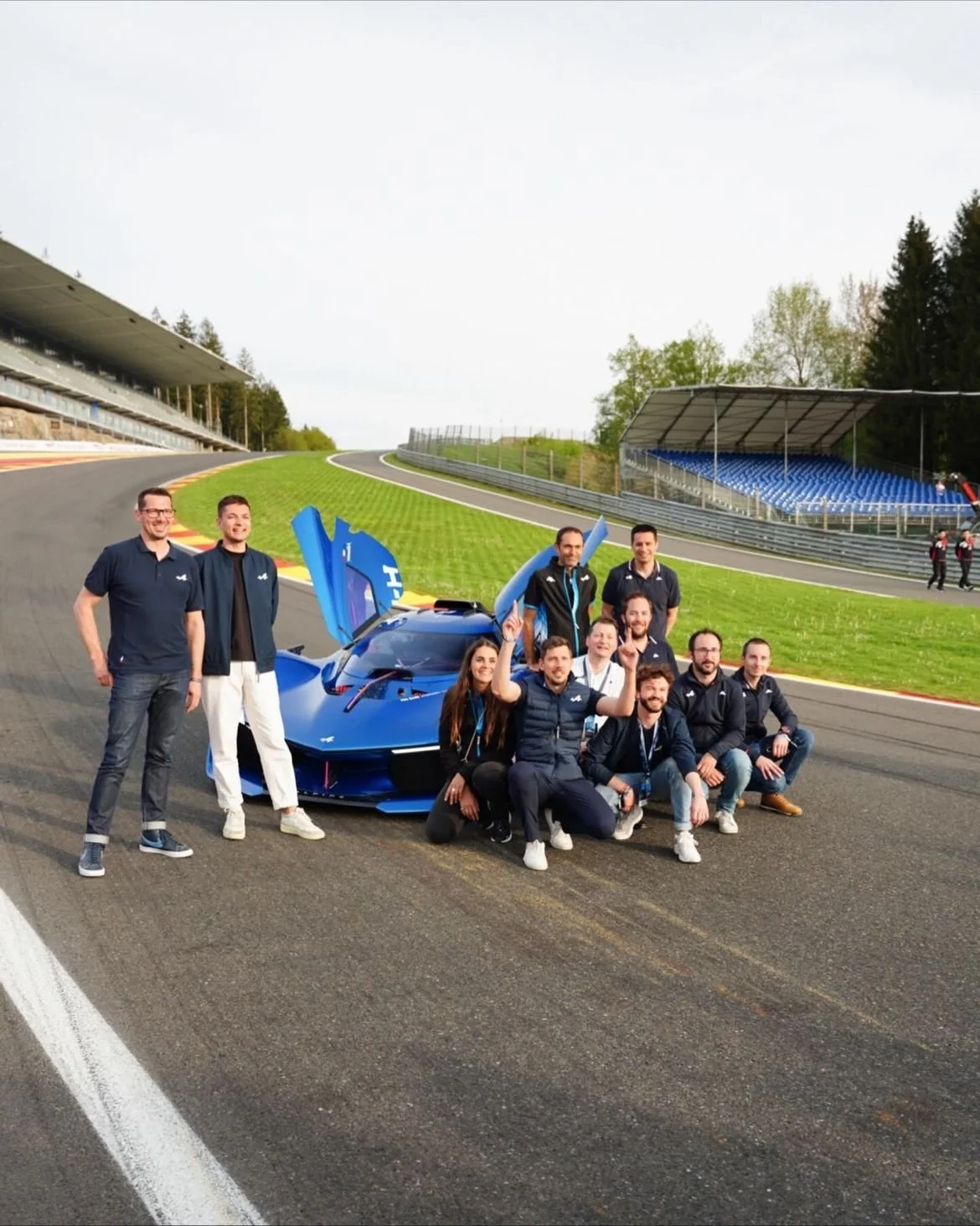
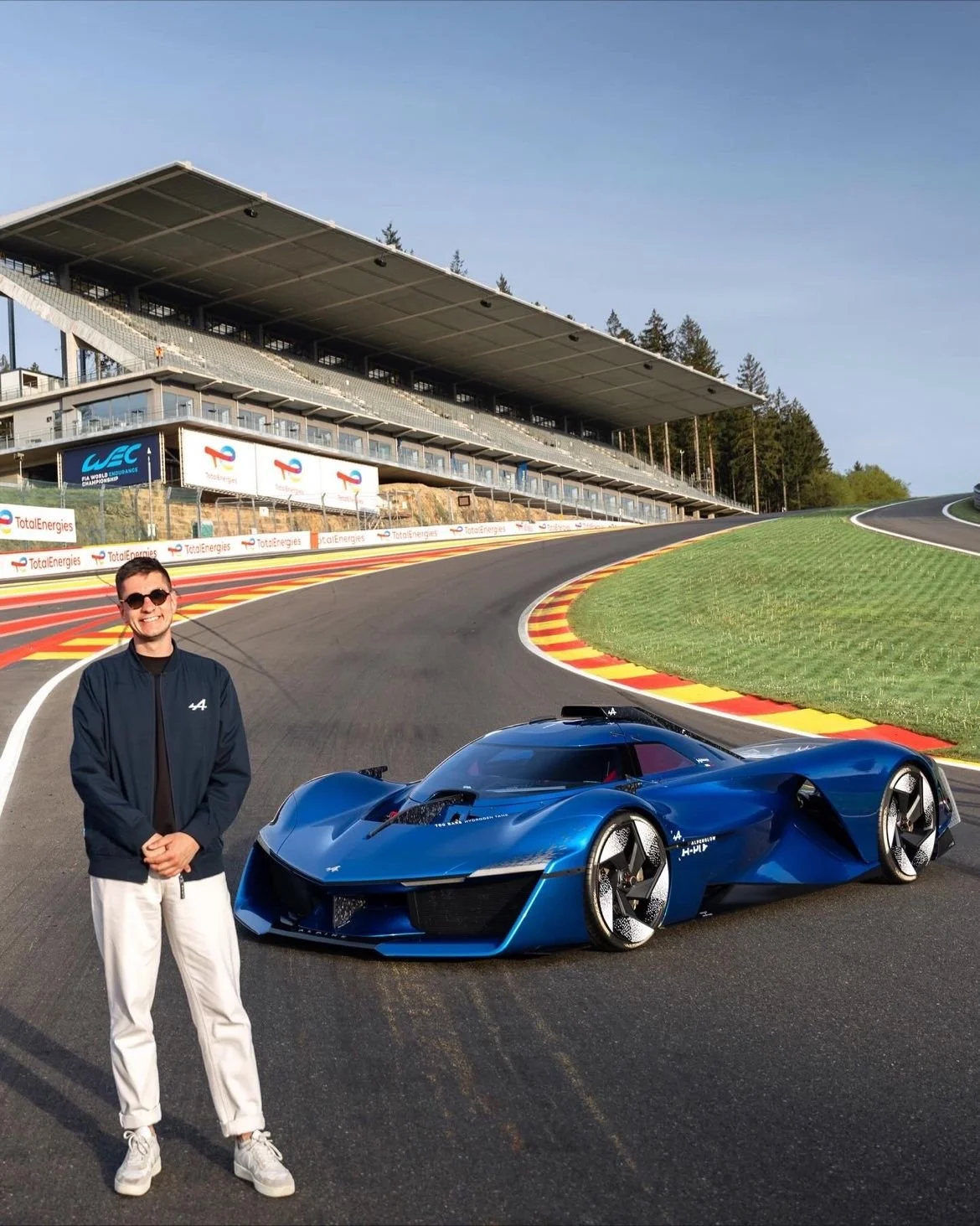
When the Alpenglow prototype finally rolled toward Patrice at the Spa-Francorchamps Circuit, it wasn’t just a car. It was the result of everything that had happened before it: the nights, the pressure, the team, the belief.
“These are moments you can’t buy, that’s why I do this job.”
But moments like these are rare.
Patrice is clear about that. In design, you lose far more projects than you win. Nothing is personal. Sometimes another vision is simply better, as was the case with the next A110. Accepting that reality forces you to question yourself constantly, without letting it erode you.
“You never design a car alone,” Patrice insists. It’s always a collaboration. Sometimes visions merge. Sometimes they evolve.
Sometimes, luck is also part of the picture. One of his favorite details on the Alpenglow, the transparent tailwing, came from a misunderstanding. A 50% opacity layer in Photoshop that accidentally looked like a transparent rear wing. The idea was liked by his boss and was kept.
The Alpine Design team has grown from six to forty-two in a matter of a couple of years and they’ve built something rare: a healthy environment. Design is a creative job. You need to be happy to create. There are projects for everyone, no unhealthy competition.
At Alpine, Patrice found the balance he needed to thrive. It’s where his journey continues now.
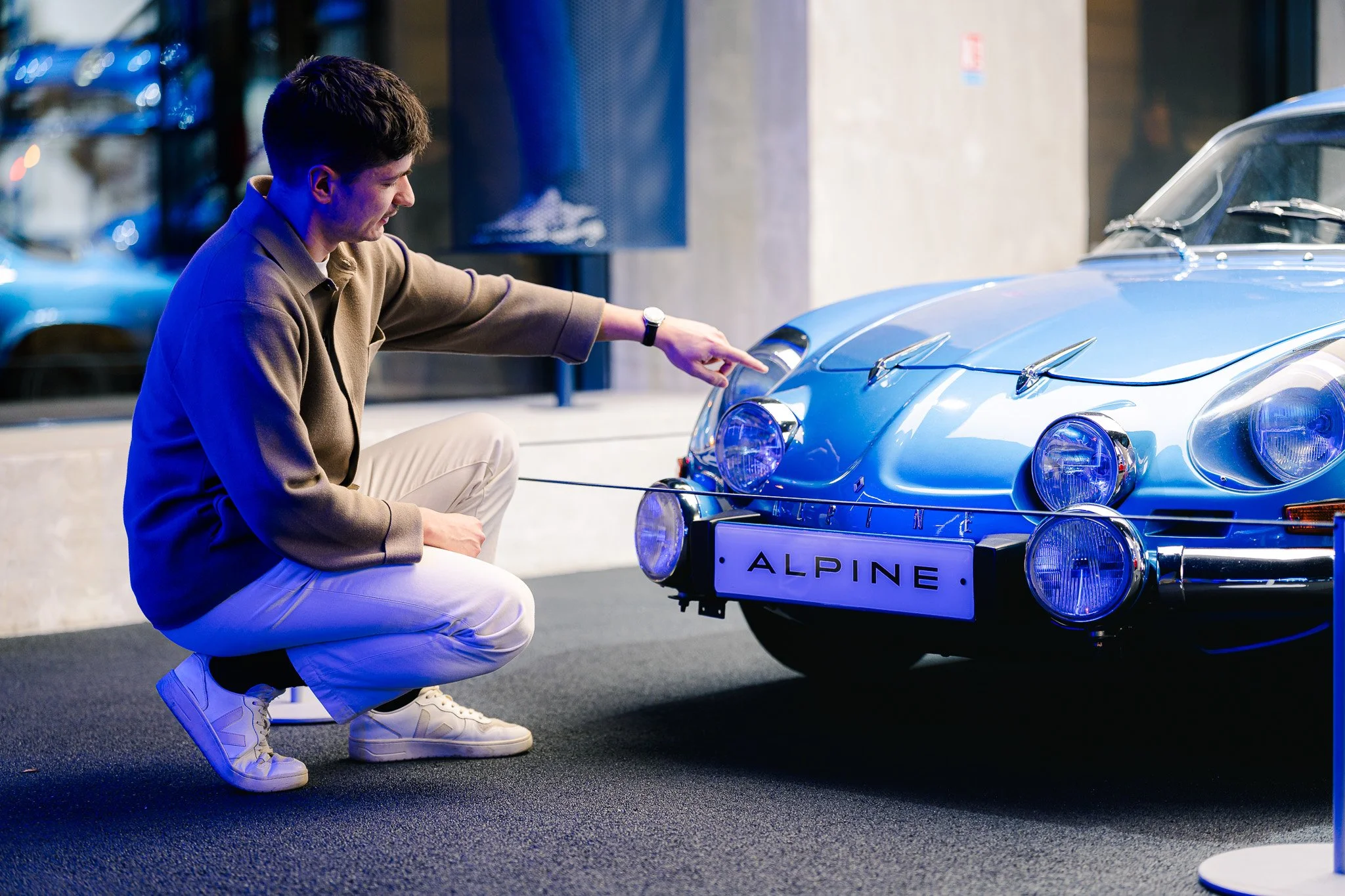
Work beats talent
After everything he’s experienced, when asked what truly made the difference in his journey, Patrice doesn’t hesitate.
“Work. Clearly.”
Talent exists, he says, but it accounts for maybe twenty percent. The rest is consistency, effort, and showing up when it’s uncomfortable.
Timing can help, encounters can accelerate things, but work is what holds everything together.
He talks about periods when nothing else mattered. Moments when comfort, balance, and social life faded into the background.
There’s no romanticism in the way he says it. Just pragmatism.
That mindset still shapes how he approaches his work today. Aware of how important the work/life balance can be in a creative industry like this one, and aware of how important it can be to be supported by someone else.
What’s next?
When asked where he sees himself in ten or fifteen years, Patrice pauses.
Not because ambition is missing, but because he doesn’t think in fixed endpoints. What matters to him is movement. Progress. Staying connected to what excites him, even as that evolves.
At this stage in his journey, part of what drives him is transmission.
Sharing what he has learned. Being present for younger people entering the field. Helping them navigate the same doubts, pressure, and uncertainty he once faced.
Not by giving lessons, but by showing what’s possible. By making passion feel accessible rather than intimidating.
If success means anything to him now, it’s growing without closing the door behind him.
A quiet call forward
Patrice Minol’s story isn’t built on talent alone, or on perfect timing. It’s built on choices. On direction. On compromise.
Leaving home. Leaving comfort. Accepting uncertainty. Working when others were out. Asking questions. Being wrong. Trying again. Over and over.
Nothing about it was guaranteed. And that’s the point.
If there’s something to take from his journey, it’s not that success is rare or reserved for a few. It’s that most people stop not because they can’t, but because they hesitate to commit.
“Finding your passion is the hardest part. Once you do, the rest becomes a matter of courage, consistency and compromise.”
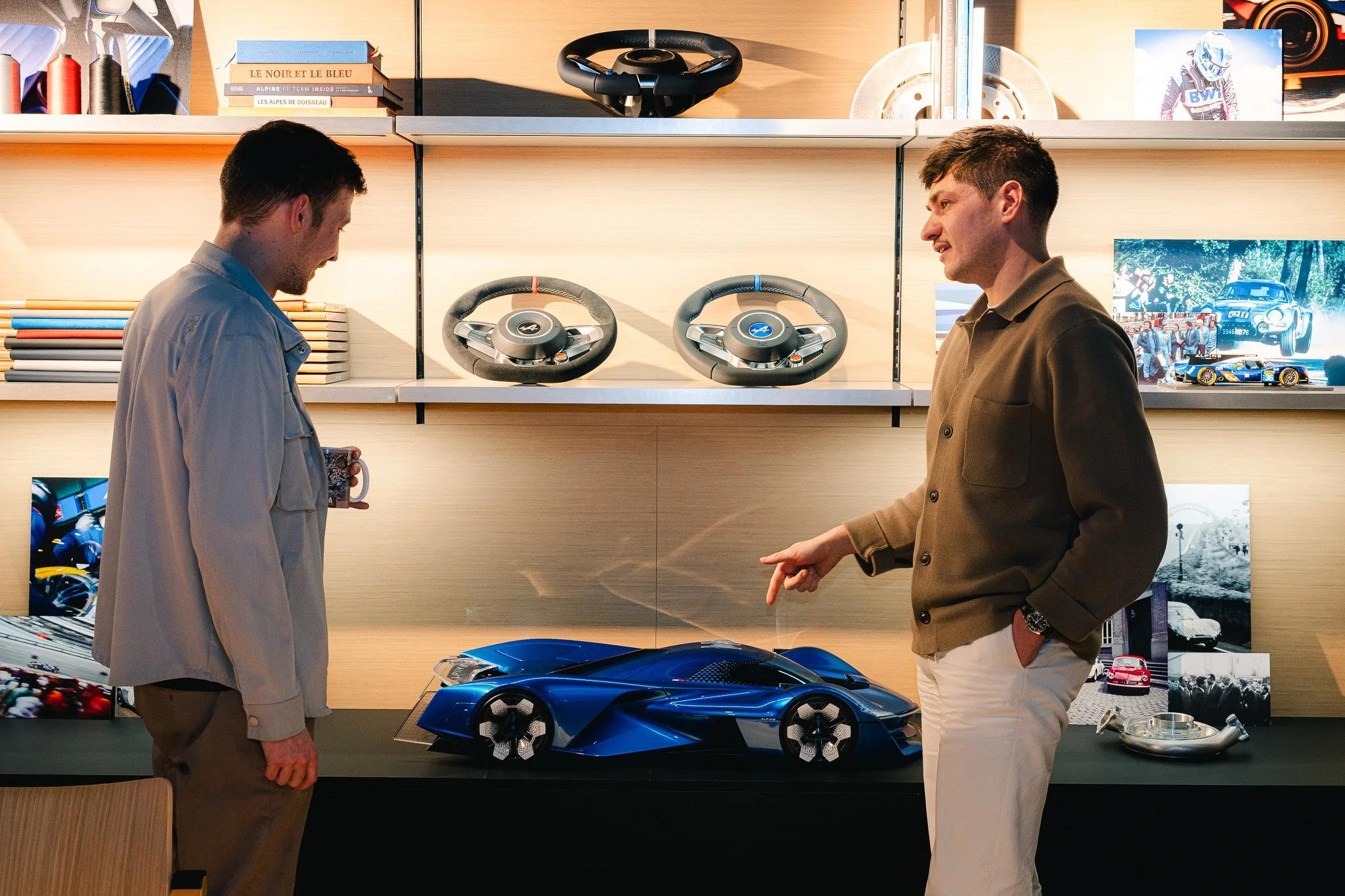
Thank you Patrice for being the first Driven by Passion guest and for inspiring the next generation of Designers.
Towards the end of the day, Patrice opened his laptop to check an email he had been waiting for.
“Congratulations…”
He read the first word, then the second. He didn’t finish the sentence out loud.
“I got it,” he whispered to himself.
We are back in 2016 and the internship he just landed was at Jaguar Land Rover in their automotive design studio. The kind of opportunity that changes a life trajectory.
For Patrice, the decision was anything but obvious. He had grown up in a small town in France. He hadn’t travelled much. English was still uncomfortable, and only weeks earlier, he had emptied his savings to move to Paris, where he had already begun an internship at a design agency, a position many would have considered the goal itself.
Saying yes meant leaving that stability behind. Leaving the country. Leaving comfort. Taking a leap of faith with no guarantees.
“If I didn’t make that decision, I don’t think I would be an automotive designer today.”